
pallets moved fully automatically since going live in 2022
Automated pallet transport in the goods issue of a logistics provider
 Go back
 350,000+ pallets since 2022: automated pallet transport in the goods issue
 In operation since 2022
  DACH region
 At a leading logistics provider in the DACH region, autonomous mobile robots (AMRs) from Pixel Robotics have been transporting picked pallets fully automatically through the goods issue since 2022 – more than 350,000 pallets, most recently over 500 per day on average and over 1,100 on peak days. And all of this in continuous mixed traffic with forklifts and people, fully remotely supervised, with no maintenance staff on site.
Results in numbers
pallets per day on average, over 1,100 on peak days
higher throughput than in the early years – with no additional hardware
of transport distance covered automatically every day
operation and support, with no robotics maintenance team on site
At a glance
- Customer
- Leading logistics provider in the DACH region (anonymised)
- Industry
- Contract logistics / B2B distribution
- Area of use
- Goods issue: picking, stretch wrapper, block storage with more than 150 target lanes; plus goods receipt
- Load carrier
- EUR pallets, foil-wrapped
- Fleet
- PIXEL Transporters in dynamically controlled fleet operation; the number of active vehicles follows the order volume
- Integration
- REST interface to the warehouse management system, fully automatic SSCC label scan, 3D measuring gate
- Operation
- In productive operation since 2022, 2 shifts on 5–6 days per week, fully remotely supervised
- Key result
- More than 350,000 pallets transported, throughput increased by over 30%
The starting point
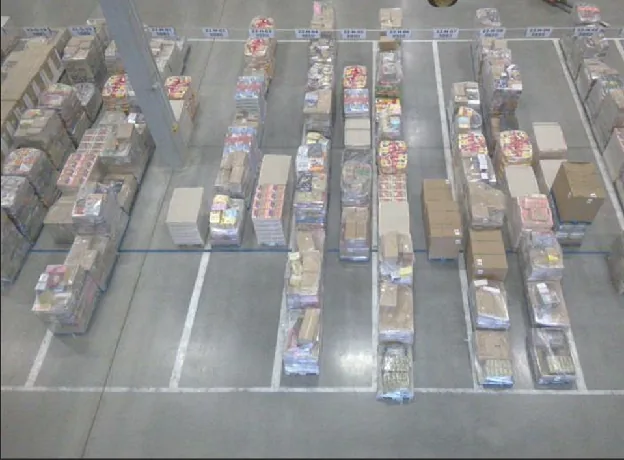
In the goods issue of the B2B distribution warehouse, picked pallets have to be transported continuously from the picking transfer points to the stretch wrapper, and from there into a block storage with more than 150 possible target lanes – transport distances of between 50 and 250 metres, run after run, shift after shift.
Specific challenges:
- Highly flexible, dynamic environment with narrow lanes and changing obstacles
- Continuous mixed traffic with manual industrial trucks and people
- Wrapped, partly reflective and irregularly packed pallets – a known weak point of classic sensor technology
- More than 150 possible destinations in the block storage, plus changing buffer areas when dispatch lanes are full
- Operation had to work without a robotics maintenance team on site – support and supervision entirely remote
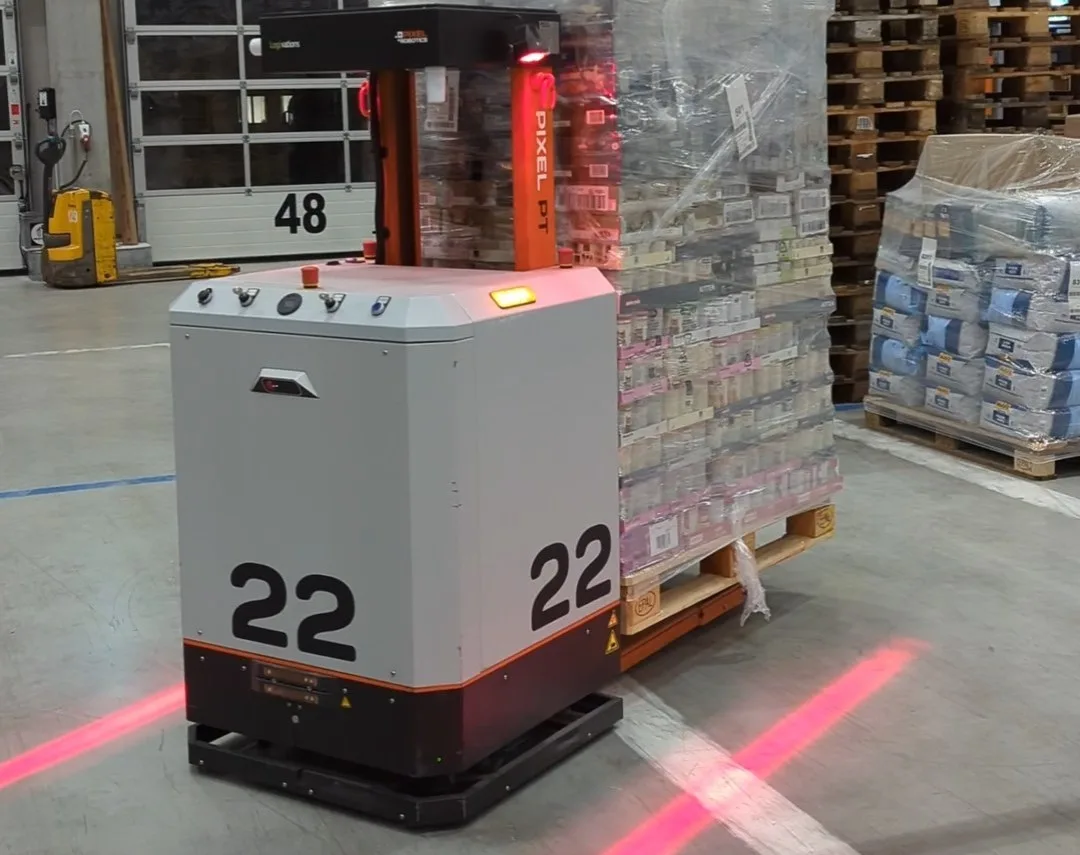
The solution: step by step to an automated hall
Instead of a big-bang project, Pixel Robotics automated the goods issue process by process – each new process building on the proven basis of the previous one. The advantage: the customer could start with a clearly defined process and expand the automation step by step on the same platform.
-
Removal from the wrapper
It all started with clearing the stretch wrapper: the AMR picks up the wrapped pallet, scans the pallet label (SSCC) fully automatically and determines the correct target lane in the block storage via the REST interface to the warehouse management system.
Unreadable pallets are automatically taken to a clarification area – the process continues without interruption.
When dispatch lanes are occupied, the AMRs buffer independently in fallback areas and make the pallets available automatically later.
-
Feeding from picking
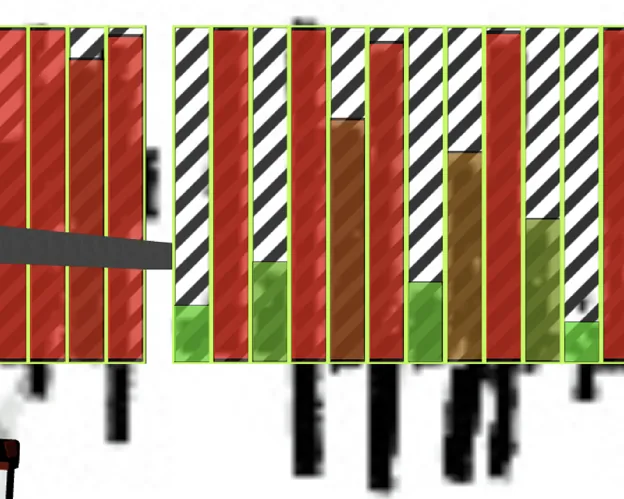
In the second step, the AMRs also took over supplying the wrapper: camera-based fill-level monitoring detects as soon as a pallet is placed on a transfer point and automatically generates the transport order – without terminal input, without manual triggering.
Before setting the pallet down, a 3D measuring gate from Pixel Robotics checks the pallet contour, and the AMR decides independently whether the pallet can be handed over to the wrapper reliably.
-
Further process variants and inbound
Additional API-based transport processes followed – the AMRs have recently gone live in goods receipt as well.
The fleet is deliberately designed for growth: fleet management always deploys exactly as many AMRs as the current order volume requires – while keeping capacity available to cover new processes and peak loads without additional investment.
Further areas of use are already in preparation.
Automatic fleet utilisation
Fleet management controls the vehicles as needed: orders are dynamically assigned to the nearest available vehicle, the AMRs switch situationally between feeder and pick-up runs and thus minimise empty runs.
Charging management also runs fully automatically in the background without interrupting operation. All of this without any structural changes – no floor markings, no reflectors, no induction loops.
The project history: proven in continuous operation – with rising throughput
The entire material flow is mapped in a digital twin. Fleet monitoring, daily operational checks and support are carried out entirely remotely by the Pixel Robotics operations team – for years, across national borders. The modular hardware concept allows the customer to carry out simple maintenance and replacement work themselves; spare components arrive by parcel.
The result of this continuous support: throughput has not fallen over the years but risen – in the last operating year it was more than 30% higher than in the early years. Automation that grows with the business.
The outcome
- Proven continuous operation instead of a pilot: productive in goods issue since 2022 – now in goods receipt too
- High everyday performance: over 500 pallets per day on average, over 1,100 on peak days, with daily transport distances of around 75 kilometres
- Scaling without additional hardware: throughput increased by over 30% compared with the early operating years – purely through continuous software and process optimisation
- Flexible process expansion: new transport processes are rolled out on the existing fleet – most recently goods receipt
- Safe in real mixed traffic: operating with manual forklifts, pallet trucks and people – day after day
- Fewer repetitive transport runs: employees can focus more on value-adding tasks
- No in-house robotics maintenance team required on site: fleet monitoring, daily operational checks and support are handled remotely
- Grows with the order volume: fleet management deploys exactly as many AMRs as the current order volume requires and keeps capacity available for peak loads and new processes
Frequently asked questions (FAQ)
How many pallets do the Pixel Robotics AMRs transport at the logistics provider?
Since going into productive operation in 2022, the PIXEL AMRs have transported more than 350,000 pallets through the goods issue. On average, that has recently been over 500 pallets per day, and over 1,100 on peak days (as of 2026).
Do autonomous mobile robots work in mixed traffic with forklifts and people?
Yes. Pixel Robotics' AMRs have been working continuously since 2022 in the same hall as manual forklifts, pallet trucks and pedestrians – without cordoned-off robot zones. Narrow lanes and constantly changing obstacles are part of everyday life at this site.
How does the AMR identify the right destination for each pallet?
When picking up, the AMR automatically scans the pallet label (SSCC) and queries the transport destination in the warehouse management system via a REST interface – among more than 150 possible target lanes in the block storage. Unreadable pallets are automatically taken to a clarification area without interrupting the process.
Are structural changes to the hall necessary for the deployment?
No. The solution works without any intervention in the existing infrastructure – no floor markings, no reflectors, no induction loops.
How does operation work without maintenance staff on site?
Fleet monitoring, daily operational checks and support are carried out entirely remotely by the Pixel Robotics operations team – across national borders. Thanks to the modular hardware concept, the customer carries out simple maintenance and replacement work themselves; spare components arrive by parcel.
Can the solution be expanded to further processes?
Yes. New transport processes are rolled out via software on the existing fleet – most recently the expansion into goods receipt. Throughput thus increased by more than 30% over the years without any additional hardware.
Do you run a block-storage warehouse and move hundreds of pallets by hand every day?
Talk to us – we'll show you how much potential lies in your goods issue.
Get in touch